
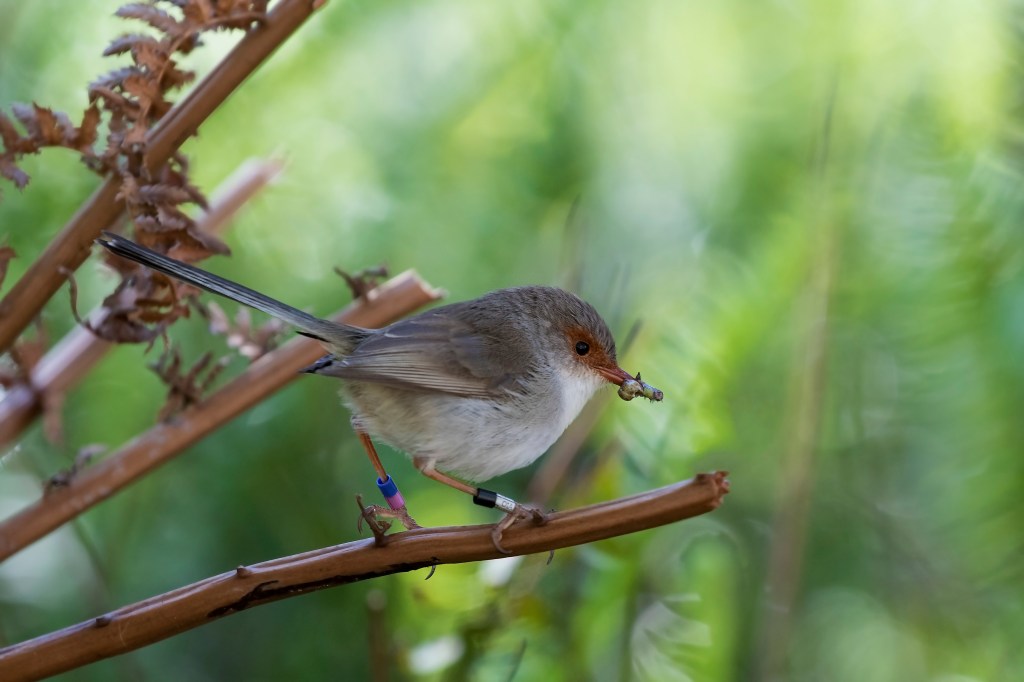
Superb Fairy-wrens (Malurus cyaneus). Since 2005, we have been monitoring superb fairy-wrens in South Australia. New to science, we discovered that mothers vocally tutor their embryos. Incubating females adaptively adjust their incubation calling behaviour, which enhances offspring vocal learning and survival against the brood parasite Horsfield’s Bronze Cuckoo (Chrysococcyx basalis). This long term project explores how birds communicate and interact socially, and how behaviours influence their survival in changing environments.
Selected publications:
Colombelli-Négrel D, Katsis AC, Common L & Kleindorfer S (2025) Personality predicts song complexity in superb fairy-wrens. Royal Society Open Science, 12: 241497
Kleindorfer S, Brouwer L, Hauber M, Evans C, Teunissen N, Peters A, Louter M, Webster MS, Katsis AC, Sulloway FJ & Colombelli-Négrel D (2024). Nestling begging calls resemble maternal vocal signatures when mothers call slowly to embryos. American Naturalist 203: 267-283
Colombelli-Négrel D, Hauber ME, Evans C, Katsis A, Brouwer L, Adreani N & Kleindorfer S (2021). Prenatal auditory learning in avian vocal learners and non-learners. Philosophical Transactions of London B376: 20200247
Colombelli-Négrel, D., Hauber, M. and Kleindorfer, S.M. (2014). Prenatal learning in an Australian songbird: habituation and individual discrimination in superb fairy-wren embryos. Proceedings of The Royal Society of London Series B: Biological Sciences 281(1797), pp. 1471-1476.
Colombelli-Négrel, D., Hauber, M., Robertson, G., Sulloway, F., Hoi, H., Griggio, M., et al. (2012). Embryonic learning of vocal passwords in superb fairy-wrens reveals intruder cuckoo nestlings. Current Biology 22(22), pp. 2155-2160.
Collaborators: Prof Sonia Kleindorfer, Dr Lauren Common, Prof Mark Hauber, Dr Andrew Katsis
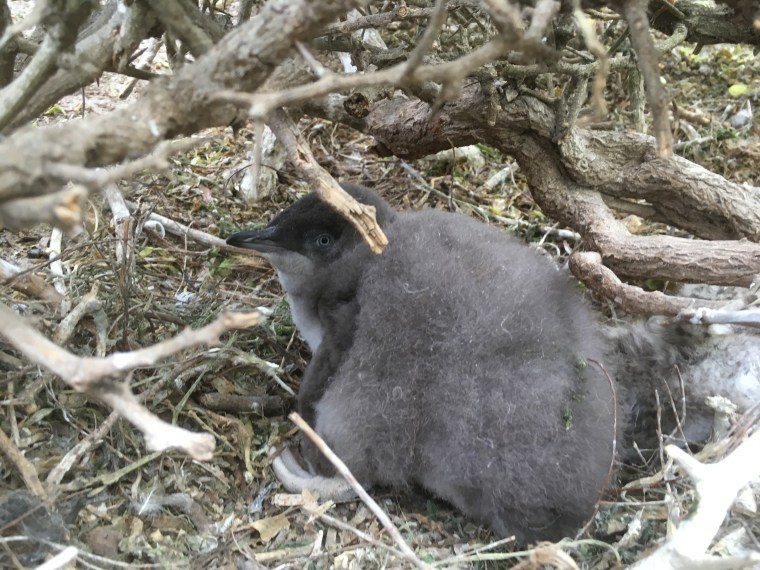
Little penguins (Eudyptula minor). Since 2012, we have been monitoring little penguins in South Australia to uncover the drivers behind their population decline. Living under constant pressure from human disturbance and other stressors, these seabirds face challenges that can erode fitness, survival, and breeding success. Using long-term data, this project investigates how penguins cope with chronic stress and identifies the biological and environmental factors that shape their ability to persist in an increasingly altered world.
Selected publications:
Silverlake A, Katsis AC & Colombelli-Négrel D (2024). Do bolder parents make better parents in anthropogenically disturbed environments? Behaviour 162: 1-40
Iasiello L & Colombelli-Négrel D (2024). Bright and early: Artificial light affects arrival time, but not group size or vigilance, in Little Penguins. Ibis 167: 248-262
Colombelli-Négrel D, Nur D, Auricht H, Clarke KD, Mosley LM & Dann P (2022). Combined effects of hydrological drought and reduced food availability on the decline of South Australian little penguins. Frontiers in Marine Science 9:875259
Colombelli-Négrel, D., Slender, A., Bradford, T., Bertozzi, T., Graf, S.S. and Gardner, M.G. (2020). Subtle genetic clustering among South Australian colonies of little penguins (Eudyptula minor). Conservation Genetics 21, pp. 747-756.
Colombelli-Négrel, D. (2015). Low survival rather than breeding success explains little penguin population decline on Granite Island. Marine & Fresh Water Research 66(11), pp. 1057-1065.
Collaborators: Dr Ondi Crino, Dr Andrew Katsis
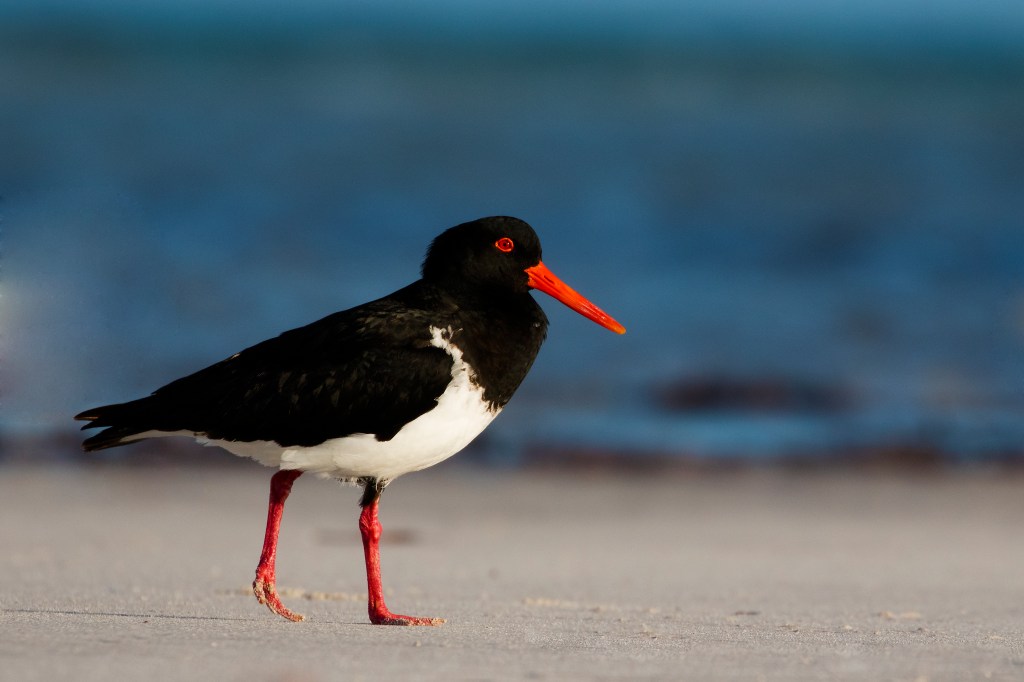
Seabirds and shorebirds. This multi-species project explores the behavioural ecology of seabirds and shorebirds in South Australia to inform effective, targeted conservation strategies. Focusing on the influence of human presence and coastal activities, the research examines how environmental pressures shape behaviours and diet, with the aim of improving management and long-term conservation outcomes.
Selected publications:
Vanderzon E, Baring R & Colombelli-Négrel D (2025). Both human activities and environmental conditions influence foraging oystercatchers on urban beaches. Emu – Austral Ornithology, 1–12
Collaborators: Dr Ryan Baring
 birdlabaustralia.com